Newsletter Subscribe
Enter your email address below and subscribe to our newsletter

Enter your email address below and subscribe to our newsletter
All voices matter
 Bysonu
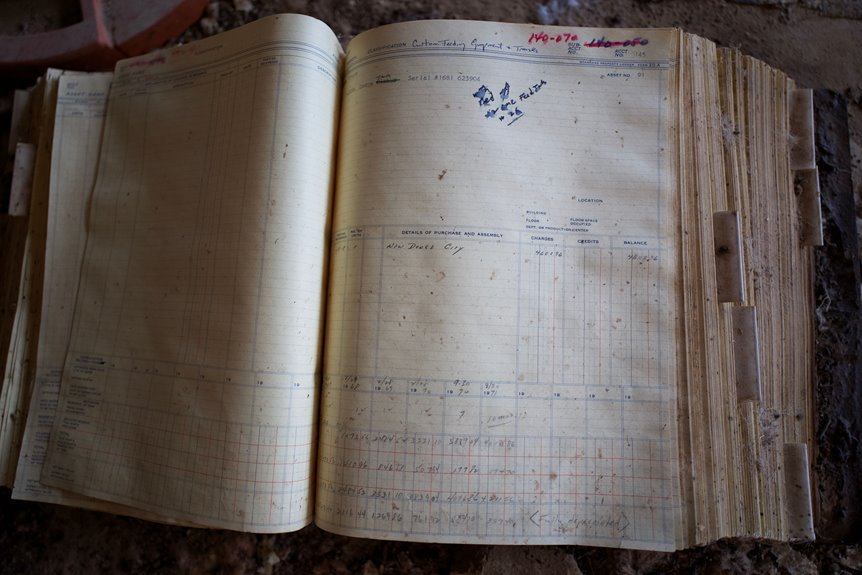
The Crystalfusion Observation Ledger provides a disciplined framework for five tied entries: 8474020001, 5034164100, 5873338605, 9548893729, and 5134455348. Each record contributes explicit dynamics, bounded interpretations, and identified gaps. The ledger supports reproducibility and cross-entry comparison through aligned metadata and timestamps. Its methodical structure invites scrutiny of causality and data integrity, while margins raise persistent questions. This balance suggests a pathway for further discussion that hinges on how observations interrelate across entries.
The Crystalfusion Observation Ledger is a structured record-keeping system that logs observed phenomena, experiments, and outcomes associated with crystalfusion research. It presents crystal dynamics with precise notation, bounding interpretation. The ledger identifies observation gaps, documenting missing data and potential causes. Methodically organized entries enable reproducibility, cross-comparison, and transparent evaluation while preserving analyst autonomy and encouraging disciplined inquiry in pursuit of freedom through rigorous evidence.
Five Entry IDS serve as a concise framework for capturing transient crystal behaviors, enabling rapid classification of short-lived phenomena and their contextual cues. The framework supports objective assessment of fleeting patterns, highlighting transient microcrystalism without overinterpretation. Cross entry correlations reveal consistent signal motifs, aiding parallel analysis across readings while maintaining methodological restraint and freedom to explore alternative explanations with disciplined rigor.
Observing readings across entries requires a structured protocol that standardizes data capture, synchronization, and cross-referencing. The method emphasizes reproducibility, traceable steps, and transparent provenance, enabling independent verification. Cross-entry comparisons rely on consistent metadata, timestamp alignment, and unit normalization. attention to observation ethics ensures respectful handling of data sources, while data provenance safeguards lineage, accountability, and interpretive integrity throughout the ledger system.
Patterns, insights, and open questions emerge from the ledger’s margins when cross-entry annotations, near-miss readings, and ancillary notes are examined for recurring motifs and outliers.
The analysis focuses on patterns context, identifying structural regularities and divergent connections.
Insights frequency varies by entry, highlighting boundary cases and temporal clusters, while questions pertain to causality, data integrity, and interpretive limits within the CrystalFusion ledger.
Entry IDs are generated through a deterministic, collision-resistant scheme tied to revision lineage, ensuring uniqueness across revisions. Each new entry derives from a parent, embedding timestamps and lineage markers to preserve traceability, enabling auditable entry id generation within revision lineage.
Cross entry codes do not deterministically map to experimental lineage; instead, they reflect metadata patterns aimed at preserving metadata integrity, archival formats compatibility, and misattribution safeguards, while data privacy constraints limit explicit lineage disclosure in cross-referenced records.
“Time is money,” analysts note: archival formats preserving metadata longevity rely on immutable containers, standardized schemas, and robust preservation workflows to ensure archival integrity, cross entry lineage, revision unique IDs, data privacy safeguards, and attribution accuracy over time.
Safeguards against misattribution exist, though safeguards overlooked may occur; cross entry ambiguity is mitigated via provenance trails, version histories, and audit logs, while archival redundancy reinforces reliability, reducing misattribution concerns and supporting transparent, accountable readings.
Data privacy is maintained through data minimization and strict access control, ensuring only essential information is stored and viewed. Observers report auditable, compartmentalized access, with regular reviews to prevent leakage, unauthorized sharing, or inadvertent exposure.
The Crystalfusion Observation Ledger aggregates five distinct entries into a cohesive framework for tracing transient crystallization events. Across timestamps, metadata, and tight protocols, the recordings reveal reproducible patterns and noteworthy deviations, enabling cross-entry comparisons with rigor. While gaps persist, the uniform structure supports methodical deduction and hypothesis testing. The ledger stands as a precise, almost surgical map of crystal behavior, exposing causality threads with clarity—yet the data loom like a towering cathedral of insight. Hyperbole aside, the clarity is monumental.